
ENIGMA COLLECTION


The third confirmed interstellar object has sparked global interest and debate as it speeds through the solar system.
View In AppDiscovered on July 1, 2025, 3I/ATLAS is the third confirmed interstellar object we have observed. It has a hyperbolic orbit, is not gravitationally bound to the Sun and will pass through our solar system. The first two interstellar objects that Earth has observed were 1I/’Oumuamua in 2017 and 2I/Borisov in 2019.
Why have we included it as an Enigma? This object has captured the nation's attention due to its fascinating and highly anomalous characteristics:
- Orbit : 3I/ATLAS follows a highly hyperbolic trajectory with an eccentricity of about 6.1 — far higher than typical long-period comets, which usually have eccentricities only slightly above 1.
- Speed : Inbound excess velocity ~58 km/s, nearly twice the speed of prior interstellar objects.
- Highly active : Significant gas and dust outgassing was detected when 3I/ATLAS was still far from the Sun, where many Solar-System comets are only just waking up.
- Size : Current estimates suggest it has a nucleus several miles across. Early Hubble observations placed an upper limit of roughly 3–4 miles. Recent Rubin Observatory measurements suggest it could be closer to ~7 miles in diameter. If the Rubin estimate holds, 3I/ATLAS would be roughly 10–25× larger than 2I/Borisov by diameter, and around 20–30× longer than ʻOumuamua.
- Surface : Polarimetric observations from several telescopes show that it exhibits unusually strong negative polarization, placing it among the more extreme light-scattering behaviors measured in any comet.
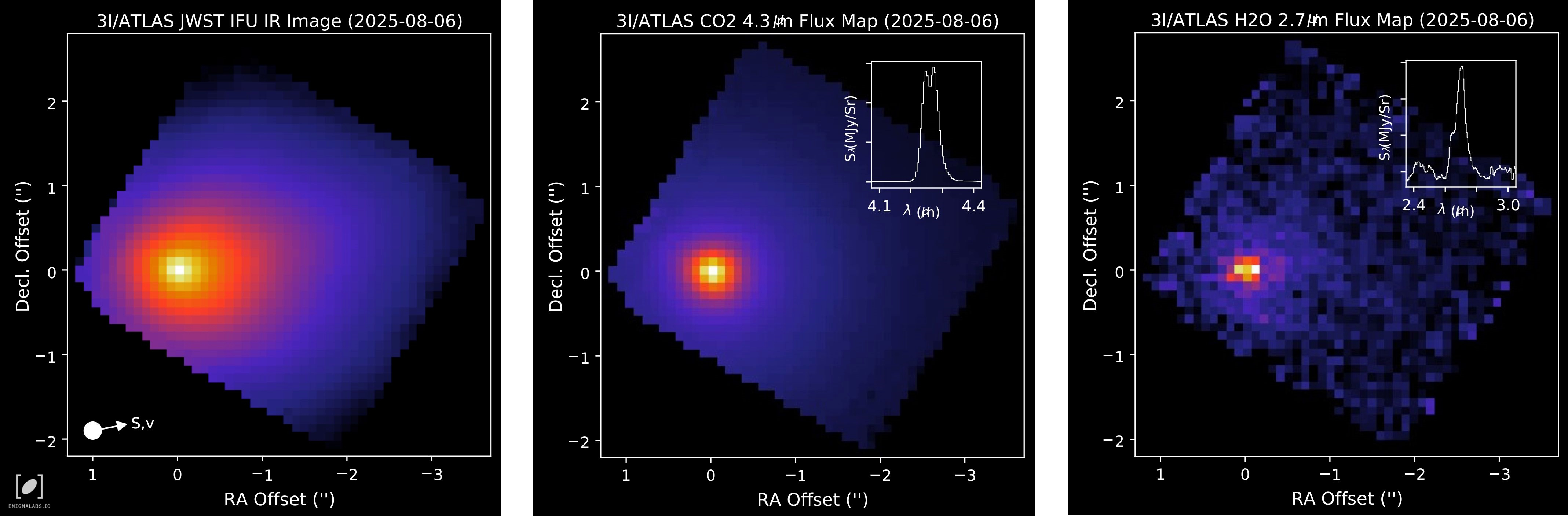
- Gas plume : Its gas coma is unusually CO₂-rich, with a measured CO₂/H₂O ratio of about 8:1—much higher than in typical comets, which are usually water-dominated.
- Sunward jets : Observations confirm that 3I/ATLAS displays both sunward and anti-solar jet structures. Their detailed physical interpretation — including their size, required surface area, or long-range orientation — is still uncertain and not yet established
- Coma : CO₂/H₂O ratio of 8:1 is the highest ever measured in a comet
- Nickel : Spectroscopic observations detected strong atomic nickel emission from 3I/ATLAS even when it was still far from the Sun — at distances where temperatures are typically too low to release metals in comets. In Solar-System comets, nickel and iron vapor usually appear in similar amounts, but in 3I/ATLAS, nickel was detected without a comparable detection of iron. This unusual Ni/Fe ratio is not yet understood and remains one of the most puzzling characteristics.
Harvard astrophysicist Avi Loeb argues in this paper that these anomalies suggest the object could be advanced extraterrestrial technology. Most scientists believe 3I/ATLAS is a highly unusual comet like nothing we have ever seen before. They suggest that its strange behavior and chemistry are because it's an ancient comet, that it originates from a metal-poor star parent system, and that perhaps it was bombarded with radiation.
As of December 2025, 3I/ATLAS remains an unidentified, anomalous (interstellar) mystery. Below you’ll find a timeline of key scientific discoveries and imagery from observers around the world. It reached its closest approach to the Sun (perihelion) on October 30, 2025, and its closest approach to Earth will be December 19, 2025 (~269 million km away). For skywatchers, 3I/ATLAS won’t be visible to the naked eye, but it can be observed and recorded with medium to large telescopes under dark and clear skies. If you capture any quality media of the object and want to be included in this Collection, send your media to [email protected] – include the date of the observation, your equipment info, the name of the observer to be credited. Happy sky and spacewatching.
Gallery (26)
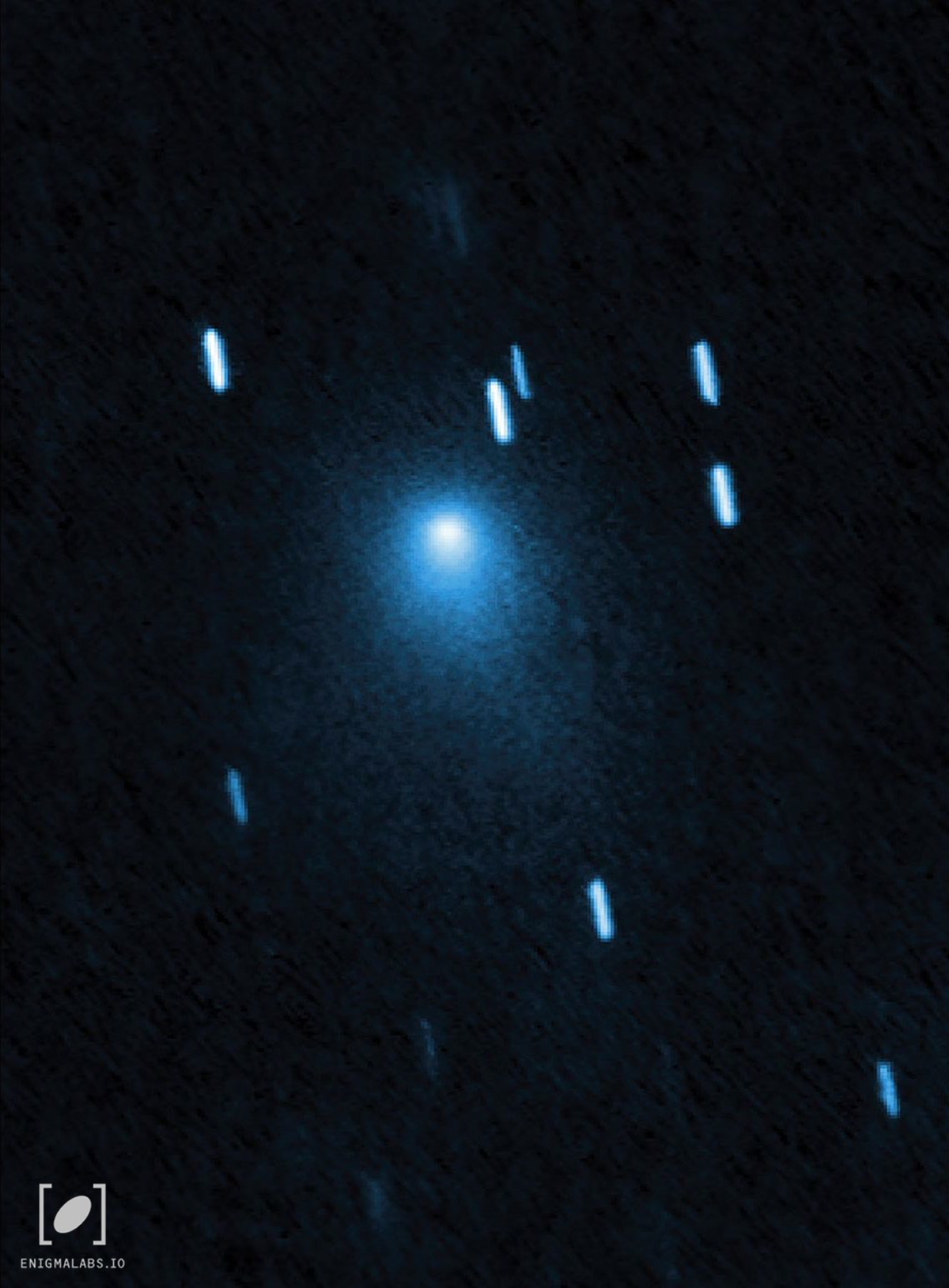
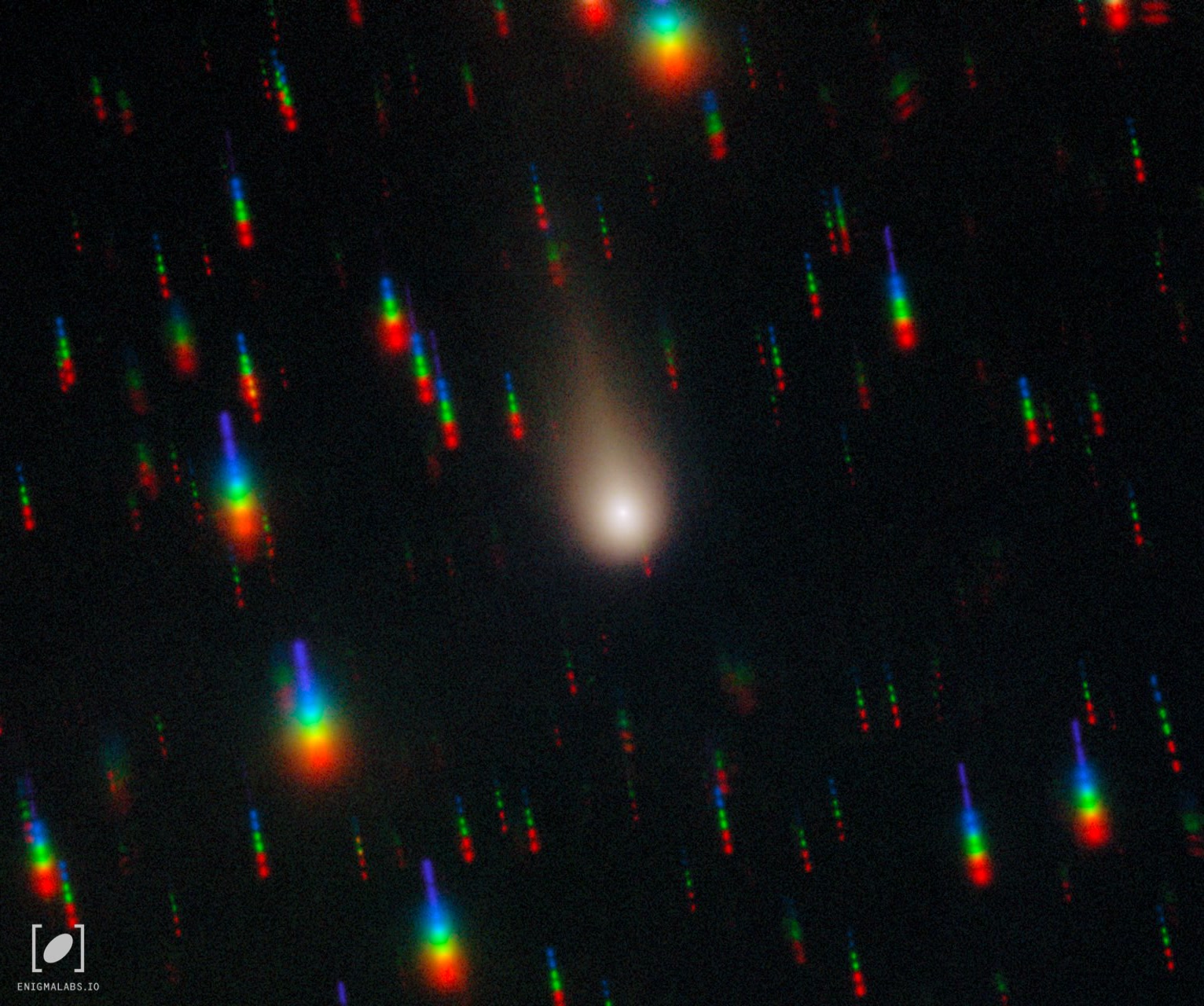
Sightings (27)
-
2025 JUL 01
-
2025 JUL 03
6:45:00 AM EDT
Antofagasta, Antofagasta, Chile
European Southern Observatory captures 3I/ATLAS' Coma -
2025 JUL 08
12:00:00 PM EDT
Washington, District of Columbia, United States
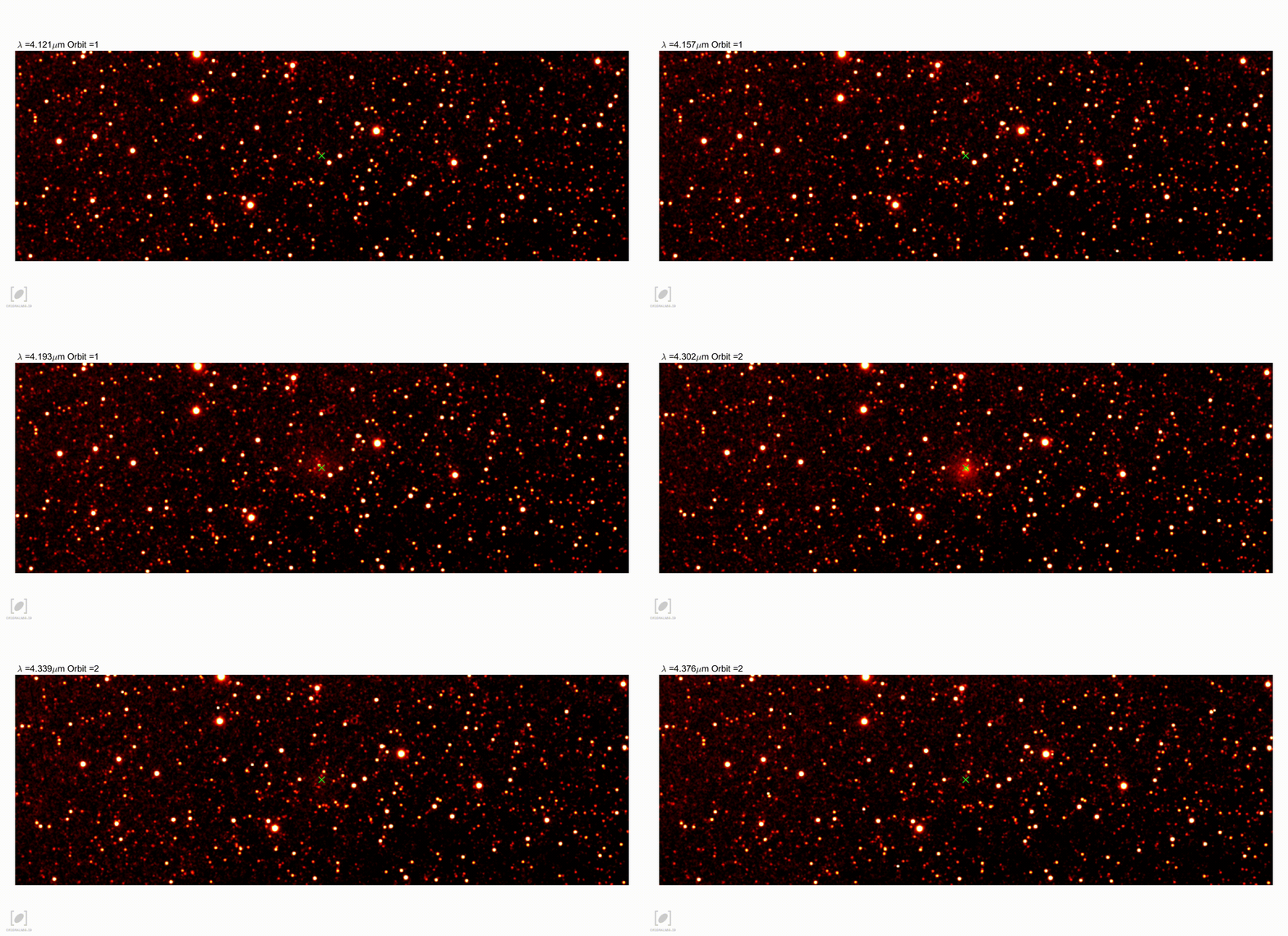
SPHEREx Analyzes Comet’s Chemistry (3I/ATLAS) -
2025 JUL 21
3:00:00 AM EDT
Los Angeles, California, United States
Hubble Telescope Capture Helps Estimate Size (3I/ATLAS) -
2025 AUG 06
12:00:00 PM EDT
Washington, District of Columbia, United States
JWST Captures Infrared Spectrum (3I/ATLAS) -
2025 AUG 28
3:45:00 AM EDT
La Serena, Coquimbo, Chile
Gemini South Telescope observes 3I/ATLAS, studying chemical composition -
2025 SEP 08
12:00:00 PM EDT
La Cañada Flintridge, California, United States
The NASA Psyche spacecraft captured four images to help determine trajectory -
2025 SEP 11
12:00:00 PM EDT
Flagstaff, Arizona, United States
STEREO-A (Solar Terrestrial Relations Observatory) spacecraft captured several images -
2025 SEP 16
11:45:00 AM EDT
Greenbelt, Maryland, United States
NASA’s Lucy spacecraft captured gas flowing to the right of the comet -
2025 SEP 20
-
2025 SEP 28
-
2025 OCT 02
12:00:00 PM EDT
Washington, District of Columbia, United States
Mars orbiter captures images of 3I/ATLAS -
2025 OCT 03
-
2025 OCT 04
-
2025 OCT 09
12:00:00 PM EDT
Washington, District of Columbia, United States
Halo around comet 3I/ATLAS moving with comet -
2025 OCT 15
12:00:00 PM EDT
Happy Jack, Arizona, United States
ESA/NASA SOHO Mission Captures Faint Image of 3I/ATLAS -
2025 OCT 30
12:00:00 PM EDT
La Cañada Flintridge, California, United States
3I/Atlas reaches its closest point to the Sun -
2025 OCT 31
-
2025 NOV 02
-
2025 NOV 11
12:00:00 AM EST
Santa Cruz de Tenerife, Santa Cruz de Tenerife, Spain
Nordic Optical Telescope captures 3I/ATLAS after perihelion
7:30:00 AM EST
Manciano, Grosseto, Italy
3I/ATLAS captured by the Virtual Telescope Project in Italy -
2025 NOV 16
-
2025 NOV 30
12:00:00 PM EST
Washington, District of Columbia, United States
Hubble tracks 3I/ATLAS as it moves through space -
2025 DEC 01
-
2025 DEC 17
12:00:00 AM EST
Payson, Arizona, United States
Andrew McCarthy Captures 3I/ATLAS Ahead of Closest Approach -
2025 DEC 18
2:00:00 PM EST
Mosonmagyaróvár, Győr-Moson-Sopron, Hungary
3I/ATLAS Observed in the Virgo Constellation